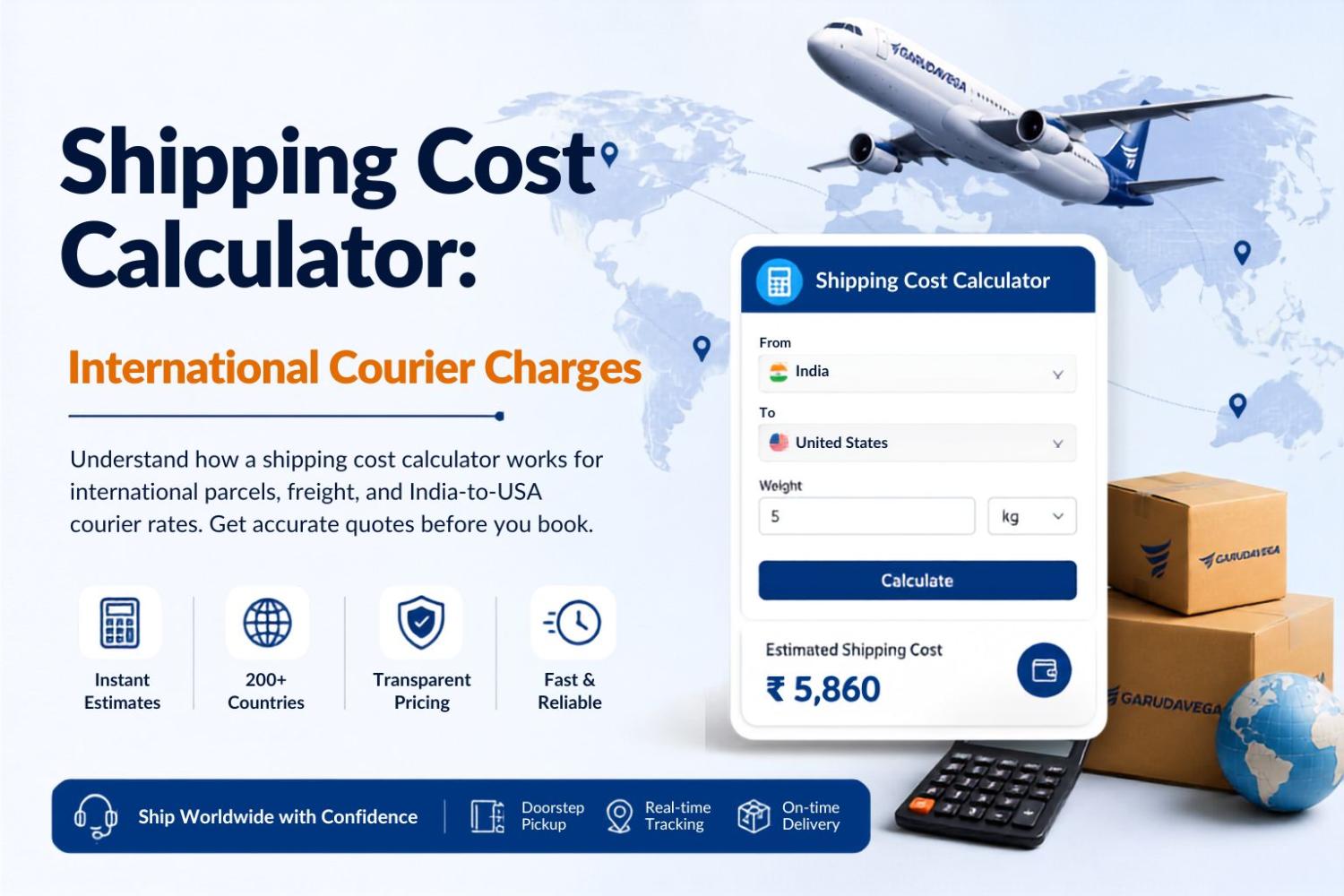
Shipping Cost Calculator: International Courier Charges
Ever hit checkout and been shocked by the shipping fee? That usually means the seller never ran the numbers through a shipping cost calculator before setting the price. A shipping cost calculator, also called a shipping price calculator, fixes that by telling you exactly what it'll cost before you commit. Let's see how it actually works, what drives the price up or down, and how to get an accurate number every time you ship.
What Is a Shipping Cost Calculator?
A shipping cost calculator is a tool that estimates how much it costs to send a package. You enter the weight, size, destination, and speed, and it gives you a price, often comparing a few service levels side by side. Some people search for this as a shipping price calculator, but it's the same idea.
Quick takeaways:
• Price depends on weight, size, distance, and speed, not just weight alone.
• A big, light box can cost more than a small, heavy one.
• An international shipping cost calculator also factors in customs duties and taxes.
• A freight calculator is a different tool entirely, made for bulk cargo, not single parcels.
• Rates change often, so a live calculator is always more reliable than a printed price list.
How Does It Actually Work?
A shipping cost calculator runs through the same process every time you use it:
1. You enter the weight and dimensions of your package.
2. It works out "dimensional weight" (explained below) and compares it to actual weight.
3. It checks the distance the package is travelling, known as its shipping zone.
4. It matches your chosen speed, whether that's standard, express, or priority.
5. It adds extra fees like fuel surcharges or handling charges.
6. It shows you the final price, usually with a few options to choose from.
Manually working through all six steps for every order isn't realistic at any real volume, which is why most sellers now automate this with a calculator instead.
Why Does a Light Box Sometimes Cost More Than a Heavy One?
Carriers don't just charge by weight. They also charge by how much space a box takes up in a truck or plane. This is called dimensional weight, and it's one of the main reasons a basic calculator can surprise you with a higher price than expected. A big box of pillows might weigh almost nothing, but it still takes up a full shelf, so carriers charge for that space.
Here's how it plays out in practice:
1. Measuring the package. The carrier records the length, width, and height, usually rounded up to the nearest whole unit, since small measurement gaps can shift the final price.
2. Working out the volume. Multiplying the three dimensions together shows how much space the box occupies, regardless of what's inside it. You can check the volume with the volumetric weight calculator.
3. Applying the divisor. That volume is divided by a fixed number set by the carrier, commonly between 139 and 166 for domestic-style pricing, or 5000 when dimensions are in centimetres for international shipments.
4. Comparing the two weights. The carrier now has two figures: what the package actually weighs, and what it weighs on paper based on size.
5. Billing the higher number. Whichever figure is larger is used to calculate your final cost, which is why an oversized, lightweight box can end up costing more than expected.
What Affects Your Shipping Cost?
| Factor | Why It Matters |
| Weight and size | Heavier or bulkier packages cost more to move |
| Distance | Longer shipping zones increase the base rate |
| Speed | Express and priority options cost more than standard service |
| Destination country | Customs handling and local delivery networks affect pricing |
| Fuel surcharges | These shift regularly with fuel prices |
| Peak season fees | Carriers often add extra charges around major holidays |
Every one of these factors is exactly what a good calculator is built to account for, which is why two packages that look identical on the outside can end up with very different prices.
International Courier Rates: What Determines Them?
International courier rates aren't a single fixed number. They shift based on a combination of factors, and understanding these helps explain why two quotes for what looks like the same shipment can come out very different.
| Factor | How It Affects the Rate |
| Destination country | Some countries have denser courier networks and lower delivery costs |
| Chargeable weight | The higher of actual or dimensional weight, as explained above |
| Service tier | Standard, express, and priority options are priced differently |
| Customs and duties | Added on top of the base courier charge, based on declared value |
Provider Rates vary between couriers, so comparing before booking matters
Shipping Internationally? Here's What Changes
An international shipping cost calculator does everything a regular one does, plus it adds customs duties and taxes based on the item's value and type. That's why an international quote can look very different from a domestic-style estimate for the "same" package.
International Courier Charges From India to the USA: What to Know
This is one of the most common international shipping routes, and India to USA courier charges depend heavily on weight, service level, and provider. Figuring out shipping cost from India to the USA per kg means looking at the same variables: courier charges from India to the USA per kg aren't fixed, since rates shift with fuel surcharges, demand, and whichever carrier you book with. Rather than quoting numbers that go stale quickly, here's what actually drives India to USA parcel charges per kg on this route:
| Shipment Type | What Usually Affects the Price |
| Documents (light, under 500g) | Lowest cost tier, usually economy or postal service |
| Small parcels (1 to 2 kg) | Priced per kg, varies by standard vs. express service |
| Mid-size parcels (up to 10 kg) | Per-kg rate typically drops as weight increases |
| Bulk shipments (30 kg+) | Often billed at a flat, lower per-kg business rate |
Shipping rates for this route generally vary by weight, starting at a lower price for small parcels under 500 grams and increasing progressively up to 30 kg. Bulk shipments above this weight may qualify for a lower flat rate. These figures indicate a general pricing pattern rather than exact costs, as shipping rates on this route change frequently.
What to Check Before Booking
Because international courier rates shift often and vary by provider, confirm these before you book:
• Whether taxes are already included in the quoted price
• Whether fuel or demand surcharges are added separately
• Who's responsible for customs duties on arrival (usually the recipient)
• Any weight limits on restricted items like medicines
• Whether the number you're looking at is a live quote or an outdated published rate
Freight Calculator vs. Shipping Cost Calculator
Moving pallets or bulk cargo? A regular shipping cost calculator won't cut it. You need a freight calculator, sometimes called a freight estimator, which prices shipments by freight class, cubic volume, and transport mode, not simple weight.
| Shipping Cost Calculator | Freight Calculator | |
| Best for | Single packages | Pallets, bulk cargo |
| Priced by | Weight or dimensional weight | Freight class and volume |
| Common users | Individuals, online sellers | Manufacturers, importers |
If your shipment is heavier than about 70 to 150 lbs per piece, or takes up a full pallet, it's time to use a freight estimator instead of a standard calculator.
Whether you're shipping across the country or overseas, running your numbers through a shipping cost calculator first is the simplest way to price shipping accurately and avoid surprises at checkout.