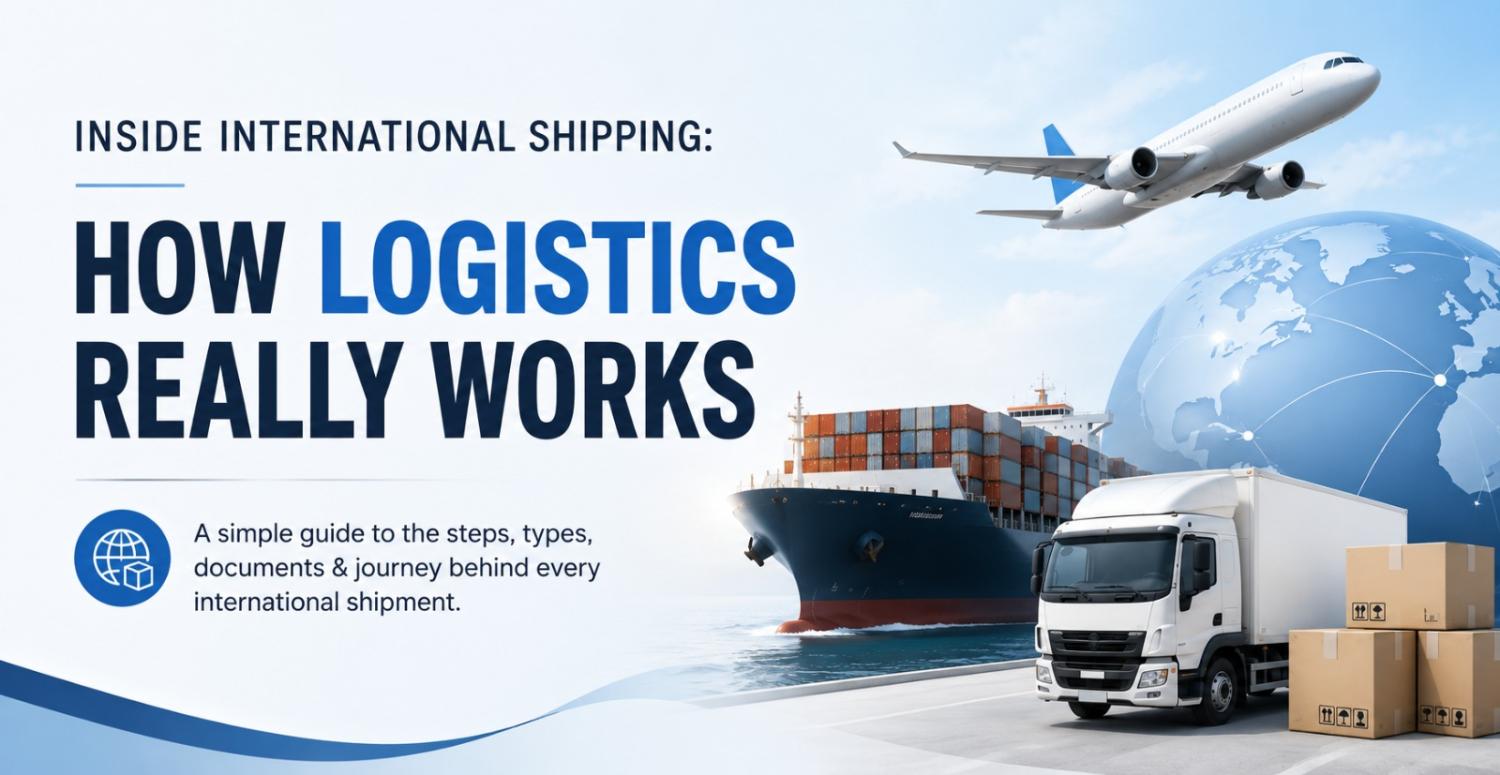
Inside Logistics: How International Shipping Really Works
Think about the last thing you bought that came from another country. Maybe it was a phone, a piece of furniture, or some fabric for your business. That journey, from somewhere overseas to your doorstep, is exactly what international shipping is all about, even though most of us never see the warehouses, airports, ports, and customs checks a package passes through along the way.
Most of us just call this "shipping." But that's really just the part we see. The real story is logistics. It's the whole system working quietly behind the scenes to make sure that journey actually happens, on time and in one piece.
What Is Logistics, Really ?
Logistics is the process of planning, coordinating, storing, and moving goods from one place to another. Whether it's a single document or a large cargo shipment, logistics ensures that the right item reaches the right place at the right time. It's a much bigger idea than "shipping"; shipping is just one piece of the puzzle.
Good logistics also includes:
-
Warehousing: Storing goods safely before and after they travel.
-
Route planning: Figuring out the smartest, fastest way to get cargo from A to B.
-
Carrier coordination: Working with airlines, cargo ships, and trucking networks to move things smoothly.
-
Customs and compliance: Making sure everything follows the legal rules in every country involved.
All of this together is what people mean when they talk about international or global logistics . It's the invisible grid that makes international shipping possible.
How International Logistics Actually Moves Your Shipment
At first, international logistics can seem overwhelming. But when you break it down, it's really just a series of sequential steps working together. Let's take a look at how the process works from start to finish.
STEP 1. Planning the Route
Before anything physically moves, a logistics team figures out the best path. This means looking at the type of cargo, how urgent it is, what it costs, and what specific rules apply at the destination. Good planning here is what saves time and money later.
STEP 2. Packing and Warehousing
Goods are packed securely to survive the journey, and often spend time in a warehouse before they move. This isn't wasted time; it's a key efficiency window. Combining smaller shipments together helps a logistics company use space better and keep costs down for everyone.
STEP 3. Getting the Documents Right
This is the part many people find confusing, but it's actually straightforward once you know what's needed. Typical paperwork includes:
-
Commercial invoice: The bill showing what the items are worth.
-
Packing list: A breakdown of exactly what is inside the box.
-
Airway bill (for air) or Bill of Lading (for sea): The official contract between the shipper and the carrier.
-
Export declaration forms: Official forms required by customs.
The Reality of Delays: Most international shipping delays don't happen because of weather or transport breakdowns. They happen because of missing or incorrect documents. This is why working with experienced freight forwarders and logistics partners like Garudavega makes a big difference .
STEP 4. Choosing the Transit Mode: Air vs. Sea
Not
every package needs to travel the same way. Usually, it comes down to choosing between speed and
your budget. But here is the trick: the actual cost depends a lot on how big and heavy your shipment
is. Good
logistics
management means looking at these
details
so you
don’t
overpay.
Here
is an easy breakdown of how they compare:
| Feature | Air Freight | Ocean Freight |
|---|---|---|
| Speed | Faster (Usually 3 to 8 business days) |
Slower (Usually 20 to 45+ days) |
| Cost Structure | Priced by weight/volume. Highly cost-effective for smaller or lighter shipments. | Priced by container space. Highly cost-effective for heavy, bulky, or massive cargo. |
| Best Used For | Urgent items, documents, small parcels, or high-value goods. | Large inventory runs, furniture, machinery, or non-urgent bulk goods. |
| Security & Handling | High security with minimal physical handling along the route. | Sturdy container protection, but exposed to transit elements longer. |
"Not sure whether air or ocean freight suits your shipment? [Get a free quote from Garudavega's logistics experts] and find the most cost-effective option for your cargo."
STEP 5. Getting Through Customs
Every shipment crossing a border must clear customs twice: once when it leaves the origin country, and again when it arrives at the destination. Customs officers check for accurate documentation, correct duty/tax payments, and total compliance with import and export rules.
STEP 6. Tracking the Journey
Once cleared, the shipment moves through different transit hubs. Modern logistics relies on real-time tracking so that you, the shipper, always know exactly where your goods are at any given moment.
STEP 7. Final Delivery
The last step is getting the shipment from the destination port or airport to its final physical stop. This is called the “last mile,” and it's where local international courier services play their most critical role.
The Different Types of Logistics You Should Know About
Logistics isn't a one-size-fits-all operation. The process varies depending on what is being shipped, where it's headed, and the business model. Here is a quick reference guide to the terms you'll often hear:
| Type of Logistics | What It Focuses On |
|---|---|
| Inbound Logistics | Getting raw materials, parts, or goods into a business so production can happen. |
| Outbound Logistics | Packing and delivering finished products to the final customers. |
| International Logistics | Managing the specific documents, customs requirements, and routes across two countries. |
| Global Logistics | Managing complex, large-scale supply chains across multiple countries and regions simultaneously. |
| Reverse Logistics | Handling the "backward" flow of goods—specifically customer returns, repairs, and recycling. |
| Third-Party Logistics (3PL) | Outsource shipping operations where experts handle your warehousing, transport, and customs. |
How the Right Logistics Partner Can Help
As you can see, international shipping involves many moving parts. Documentation, customs clearance, transportation, and final delivery all need to align seamlessly. This is where an experienced logistics partner like Garudavega helps, offering worldwide coverage, multiple shipping options, and hands-on support with documentation to take the stress off your shoulders.
One thing that makes a real difference is visibility. Being able to track your shipment from start to finish is far better than simply waiting and hoping. With the Garudavega app , the entire process becomes even simpler, letting you book, manage, and track shipments right from your phone.
Understanding how logistics works behind the scenes gives you control, but having the right support makes the actual experience effortless.
Conclusion
International logistics is the engine that drives global trade. It includes everything from the initial route planning and paperwork to the physical transportation and final-mile delivery. When all of these steps work together smoothly, international shipping stops feeling like an unpredictable guessing game and starts feeling like something you can simply rely on to grow your business or connect with loved ones.
Ready to ship internationally?
Check Garudavega's shipping rates today.